Kinetic Catamarans unveils stunning new K6 range

Fast, luxury catamaran specialists Kinetic launches a new K6 range and exhibits in Europe for the first time this September

Performance voyaging in a responsive, elegant craft is the dream for most sailors, a dream that Kinetic Catamarans was set up specifically to realise by offering top-quality fast-cruising catamarans with clean lines for those with discerning tastes. Its new all-carbon K6 range aims to push the boundaries of performance cruising in luxury.

The US-based brand builds high-end bespoke multihulls in small series from its own yard in Knysna, South Africa, a facility which has recently undergone a major expansion. Kinetic’s popularity is already proven in its existing KC62 and KC54 models; now it’s shifting gears with the announcement of a new K6 range of maxi-cats, which comprises a 63 and its sistership 67.

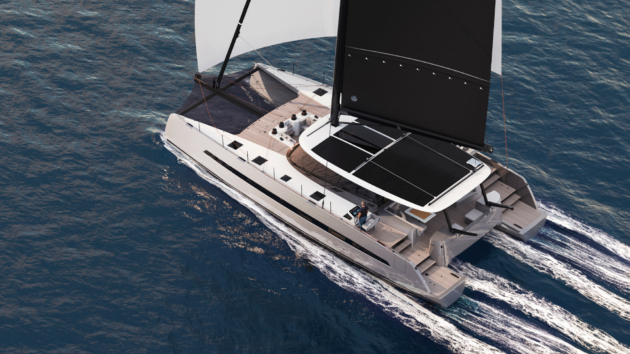
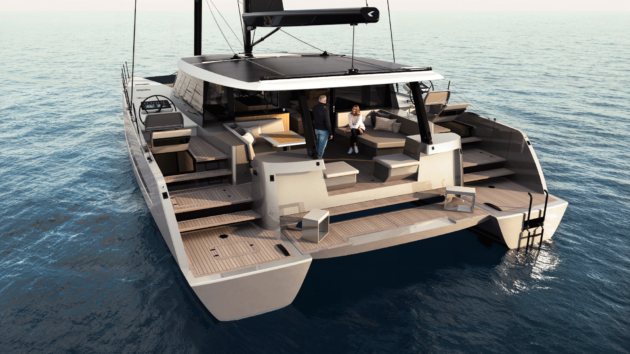
Render of the aft end of the K6

The Kinetic K6 is a new reference for true performance cruising

Where the 63 is designed to suit owner-operated cruising, with the ability to fit in a 20m berth, the 67 is more suitable for sailing with a professional crew. It should be emphasised that these two new models are individually designed and built to length, rather than one being a stretched or squashed version of the other. That means properly balanced platforms, with the 67 proportionally larger all over, with the key bulkheads moving aft to allocate its additional space proportionately and retain a balanced sail plan.

K6: For sailors who demand more

What sets the K6 range apart? Firstly, there’s the visual appeal: these fresh new Simonis Voogd designs have strikingly clean aesthetics. Then comes their tangible potential afloat: these carbon fibre builds offer thrilling sailing in first-class comfort and control.

Consider the ability to cruise shorthanded while matching the wind speed. This is achieved through multiple factors, including the lightweight composite construction, coupled with a powerful but manageable sailplan. For example, Kinetic provide the option for in-boom furling of the square-top mainsail. When you combine this with a hydraulically powered mainsheet lead and traveller, which is kept out of harm’s way on the coachroof, it all adds up to easy push-button sail trimming from the helms.

The K6 platform is also one which can be optimised further still to allow for racing indulgences, for those who occasionally want to really push their craft and see what’s under the hood.

Features born out of experience

Signature Kinetic features are continued in the K6 range, including lifting centreboards to benefit upwind performance, and spacious forward cockpits, which link to an interior helm station. This latter feature allows you to steer from a completely protected position, in close contact with the mast base winches, while being able to check the mainsail shape through the large moonroof stylishly blended into the coachroof’s solar field. For those sailors who really enjoy the hands-on sporty sensation, the K6 also has exterior wheels on the raised side decks.

Birds-eye-view of the Kinetic K6

A hydraulically powered mainsheet lead and traveller is kept out of harm’s way on the coachroof

While daggerboards are an option, Kinetic prefer centreboards as they maintain the clean deck lines and provide a safety fuse in the case of grounding. Once again, these are controlled by push-button, via powered line drivers, and are contained below the floorboards in the hulls.

When at rest, the K6 offers a formidable leisure platform. The new forward cockpit design again creates real appeal, with its removable awning and sunpads designed into the deck, while the aft cockpit is completely free of lines and sail handling systems. Imagine the horizon views from here as you fold the transom down to create a bathing platform terrace on the sea.

A real highlight of the new K6 designs lies in the flexible accommodation spaces, particularly in the owner’s suite, which can take over a whole hull as private space and offer a full office section too. These suites also have their own access out to the aft decks, for that instant morning swim.

Look and feel

September 2025 is the first time Kinetic Catamarans is exhibiting at a boat show in Europe. Be sure to pay them a visit at the Cannes Yachting Festival, from 9-14 September, on Sail booth 024, where you will be able to see their KC54 in person and learn more about this transformational new K6 range.

Biotherm wins Ocean Race Europe Leg 3 after going neck-and-neck with Team Holcim-PRB

Catch up on all the action from the Ocean Race Europe Leg 3, including an exhilarating face-off between Biotherm and Holcim-PRB and the challenging, unstable conditions in the Mediterranean.

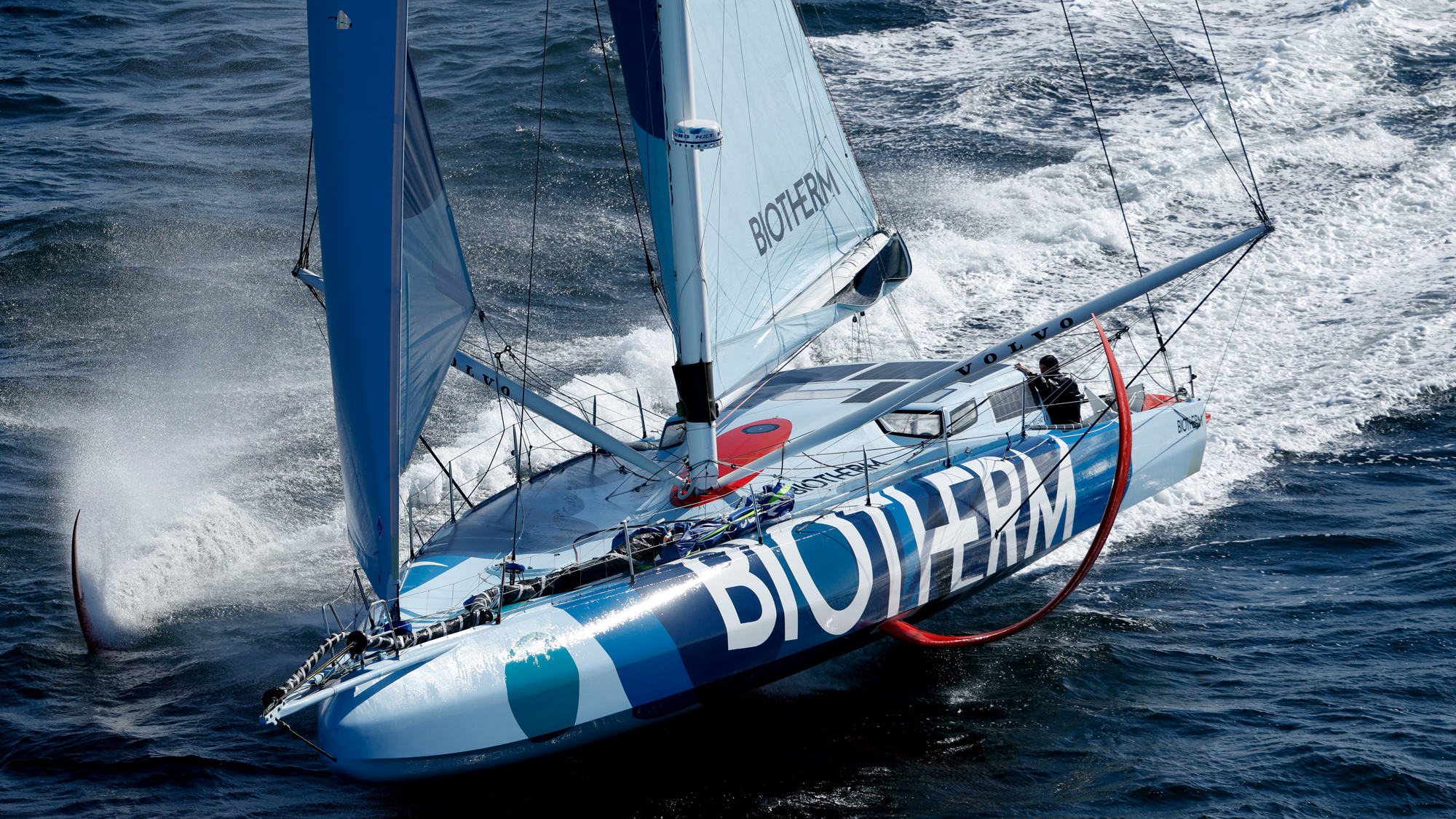
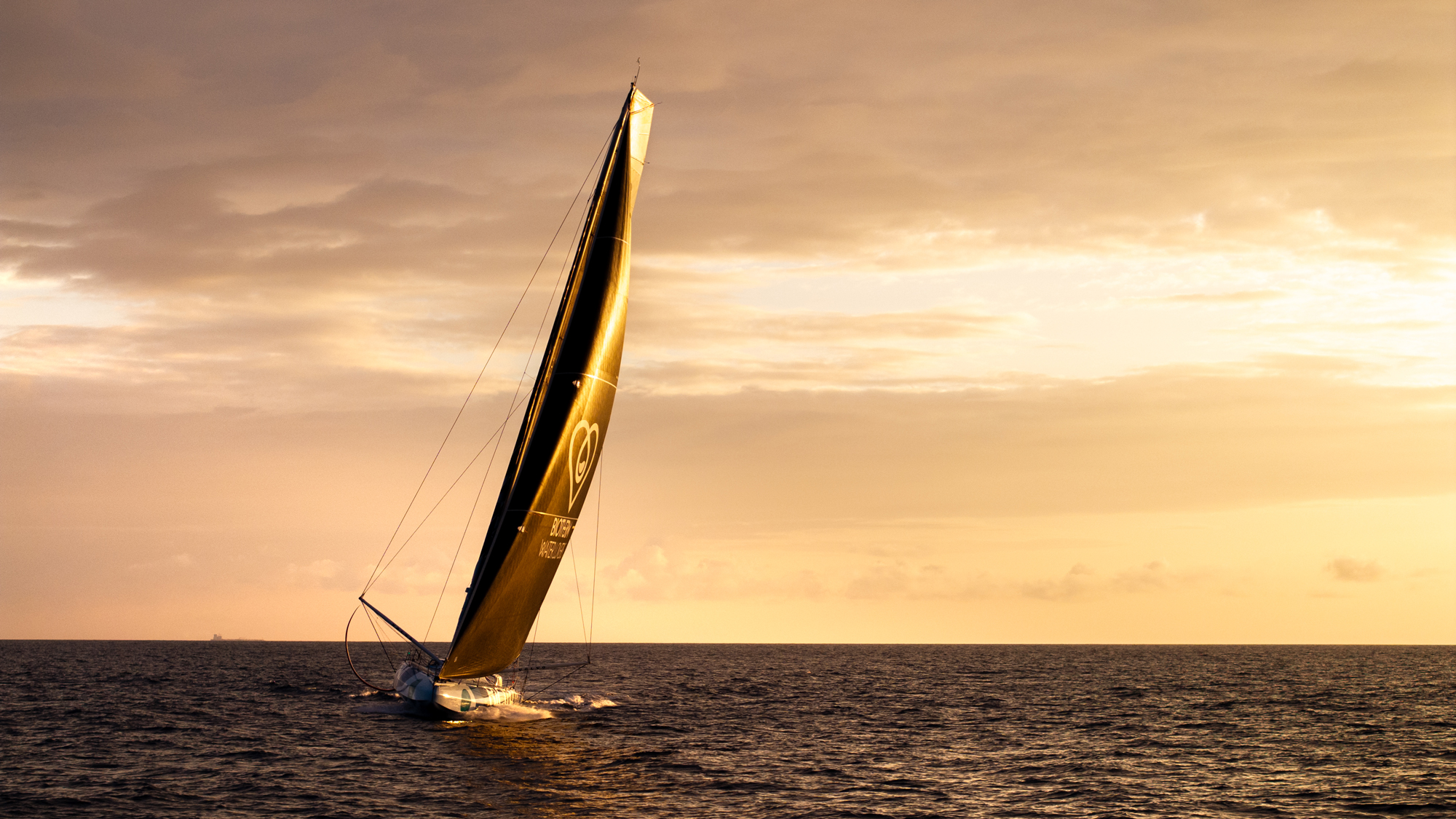
In the latest from the Ocean Race Europe Leg 3, Biotherm is still defending its perfect streak from Leg 1 and Leg 2.

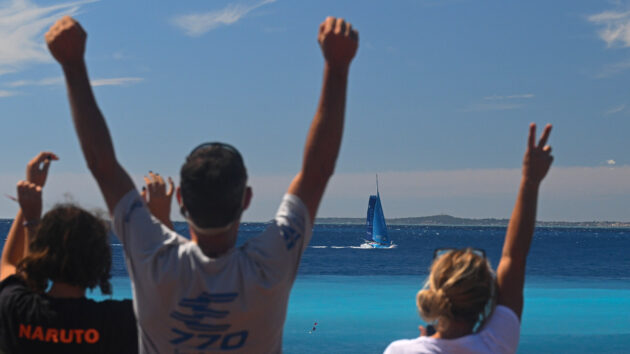
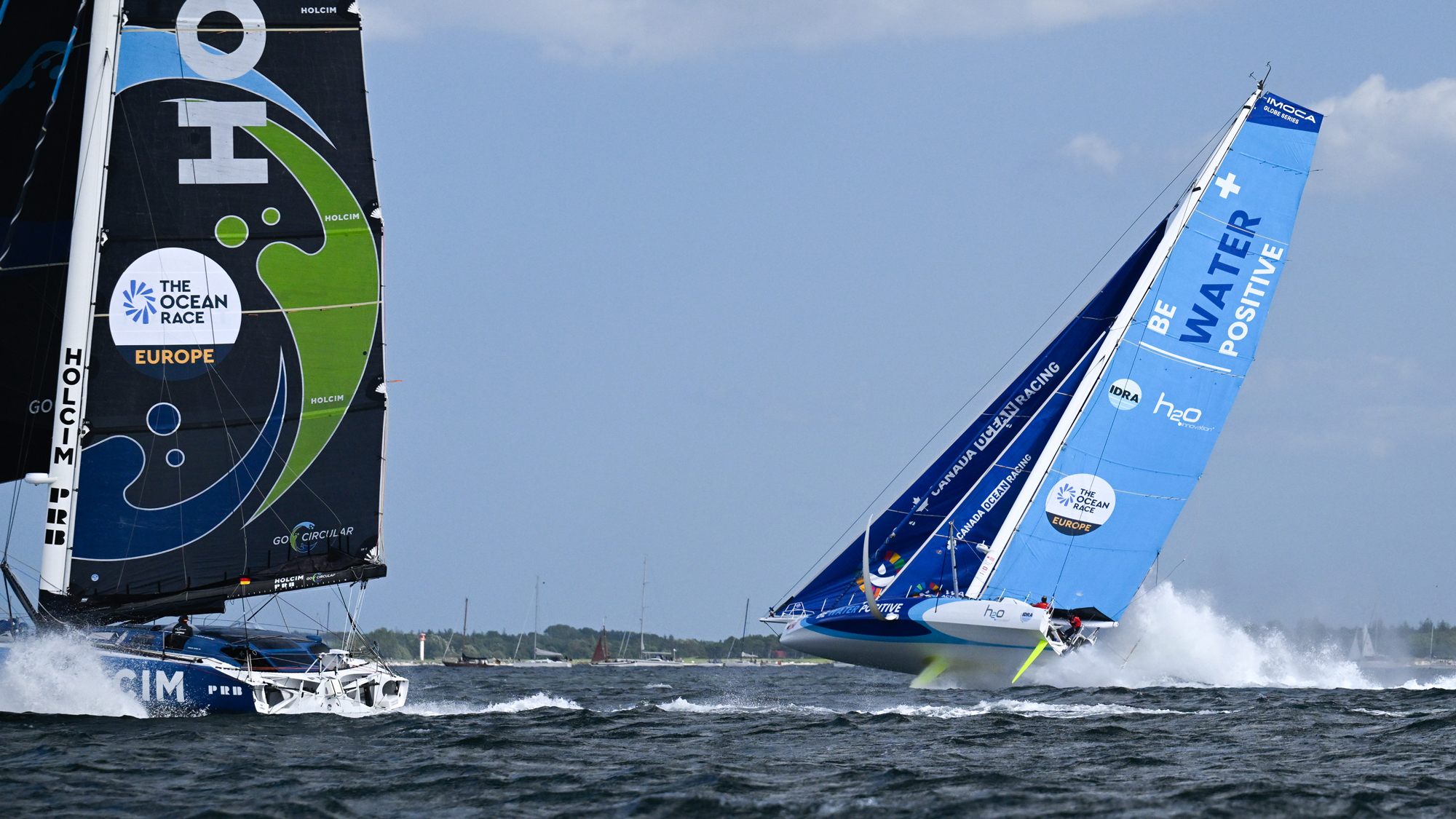
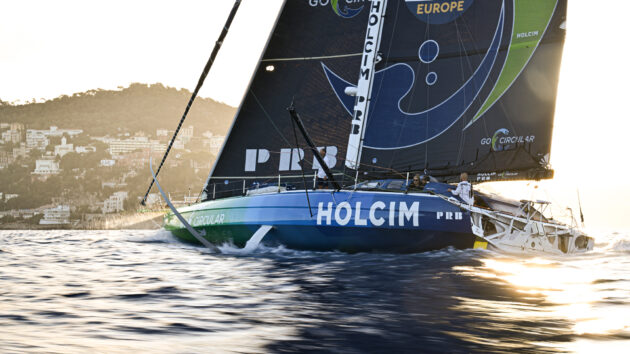
The race leader arrived in Nice just before dawn on 29 August, with Holcim-PRB following just twenty-seven minutes later. Both foiling IMOCAs averaged over 20 knots of boatspeed as they raced towards the finish line.

In third, Ambrogio Beccaria’s Allagrande Mapei, finishing just 53 minutets after Holcim-PRB.

“We didn’t make all good choices,” said Beccaria. “But we are improving so much as a team. Our boat is not designed to sail in light unstable winds like here, but as soon as we have wind we are flying. We love the boat and we love the team.”

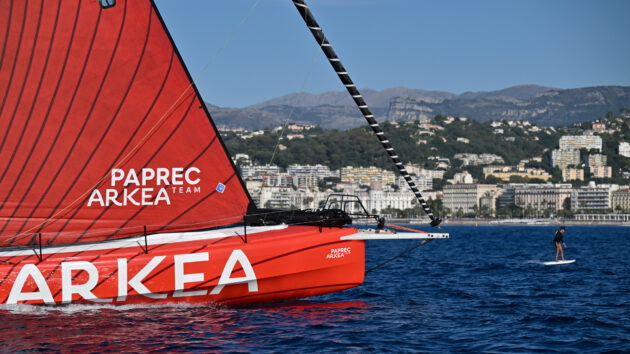
Yoann Richomme’s Team Paprec Arkéa (FRA) – skippered on this leg by Corentin Horeau (FRA) for this leg followed in 4th, despite sustaining damage after a broken halyard sent the J0 headsail into the water.

Photo: Vincent Curutchet / The Ocean Race Europe 2025.

The rest of the Ocean Race Europe fleet soon finished their 3-day, 680 nautical mile passage. The Mediterranean challenged sailors right up until the end, with unpredictable weather conditions, low pressure fronts, and sudden squalls of up to 70 knots.

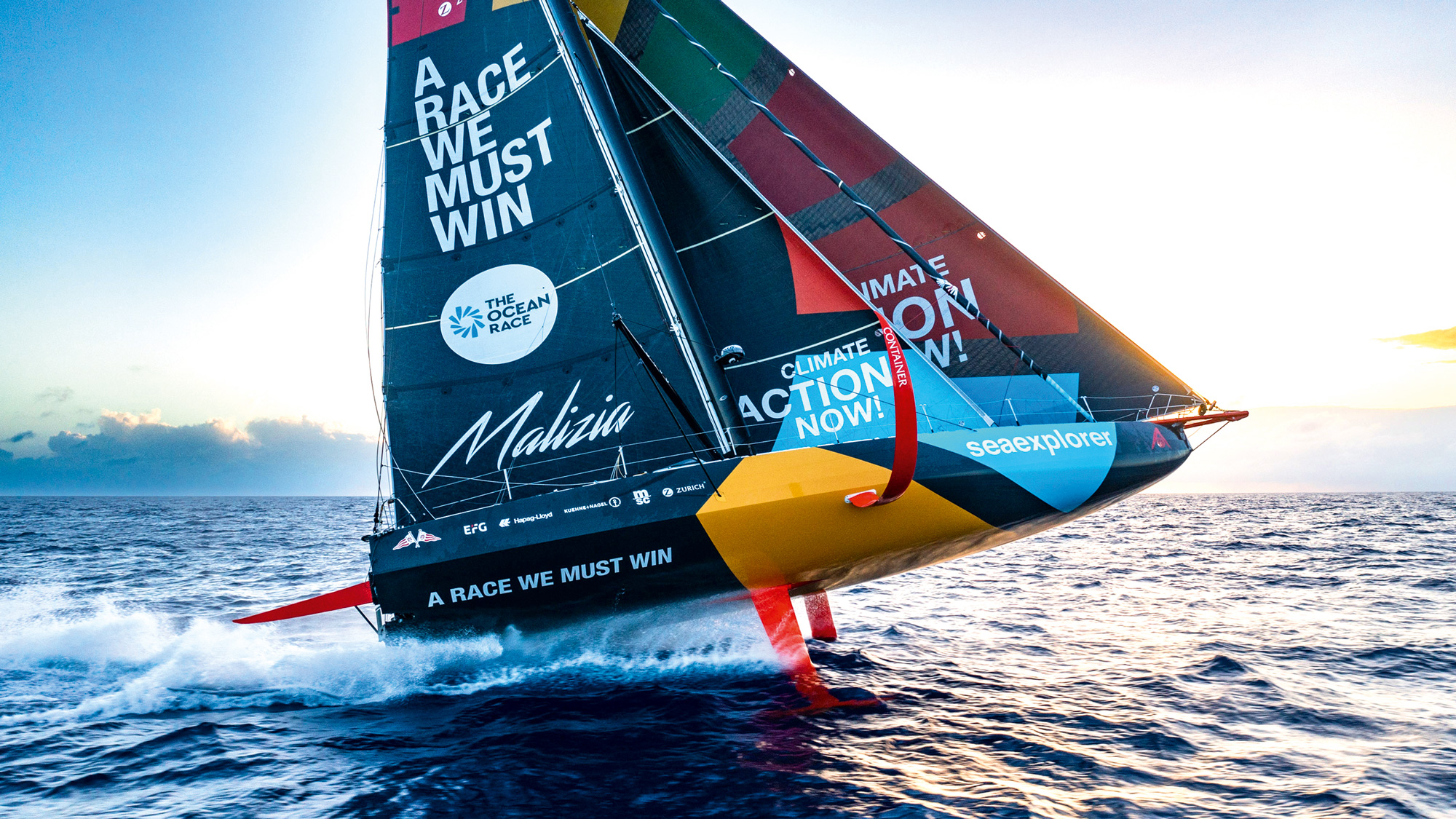
“In the light winds it can be more work than in the strong winds,” said Malizia’s Boris Hermann. “We had all conditions – from reefed and small headsails to spinnakers. We used all the sails which is not normally the case on most legs. It was all-the-time full-on action and enjoyable racing. It was so motivating to have our competition in sight all the time.”

“It was an incredible leg,” added Holcim – PRB skipper Rosalin Kuiper. “I have never experienced something like this: so many manoeuvres, all the weather models were different to what we saw on the water. We had to be super flexible and dynamic and we didn’t sleep much – the crew is exhausted.”

Ocean Race Leg 3 at a glance

  • Uncertainty over Mediterranean conditions, long nights of light airs and frequent sail changes along the Spanish coast
  • Neck-and-neck race between Biotherm and Holcim-PRB before Biotherm regained the lead
  • Unstable forecasts prompt a race course adjustment away from Ille de Giraglia to a virtual waypoint
  • Team Amaala, trailing behind the fleet, is hit with gusts surpassing 70 knots

Leaderboard

  1. Biotherm (Skipper: Paul Meilhat)
  2. Team Holcim-PRB (Skipper: Rosalin Kuiper)
  3. Allagrande Mapei Racing (Skipper: Ambrogio Beccaria)
  4. Paprec Arkéa Team (Skipper: Corentin Horeau)
  5. Team Malizia (Skiper: Boris Hermann)
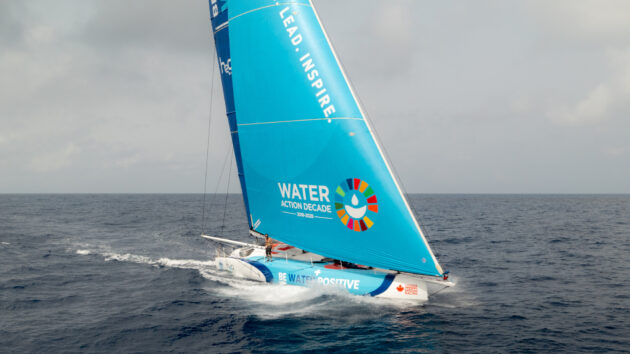
  6. Canada Ocean Racing – Be Water Positive (Skipper Scott Shawyer)
  7. (Still to finish) Team Amaala (Skipper: Alan Roura)

Seven teams, six weeks, five legs, one unforgettable race. For its 2025 edition, the Ocean Race Europe will bring together…

The opening leg of The Ocean Race Europe was rocked by drama within moments of the starting gun as two…

Paul Meilhat‘s Biotherm was the first IMOCA 60 into Portsmouth on 14 August, closing out The Ocean Race Europe Leg 1…

Paul Meilhat‘s Biotherm continues to defend its undisputed lead in The Ocean Race Europe Leg 2. After recovering from a…

The start of Ocean Race Europe Leg 3

Credits: Richard Mardens / The Ocean Race.

The fleet left Cartagena on the afternoon of 26 August in 12-17 knots of fresh north-easterly. Crews sailed upwind, braiding a neat line of tacks up the Spanish coastline.

Biotherm was again first through the scoring gate at Cabo de Palos, making the most of the ideal conditions and confirming their as-yet untarnished score.

All teams reported feeling unsettled by the incoming low pressure and the general meteorological instability of the Mediterranean.

Paul Meilhat of Biotherm commented before setting off, “There is low pressure on the way. We don’t really know what will happen but it will change the timings a lot – so we don’t really know what the course will be.”

“It’s going to be super challenging,” said Team Holcim-PRB’s Rosalin Kuiper. “We will prepare for every scenario and we will see when we are out there.”

Boris Hermann, who replaced Leg 2 skipper Will Harris onboard Malizia, says “The centre of that low might coincide with our biggest obstacle – which is the beautiful island of Mallorca. We might sneak very close past the northern coast of Mallorca, but other scenarios yield different routes. There will be surprises up until the end.”

Biotherm also made some crew changes for the Ocean Race Europe Leg 3, replacing Jack Boutel with fellow frenchman and Vendee Globe alum Benjamin Ferré.

First night of Ocean Race Europe Leg 3

Photo: Adrien Cordier / The Ocean Race.

Heading into the night, teams had to chose between preserving an ideal heading with less wind, or chasing stronger breezes offshore.

“It’s been breeze versus angle pretty much the whole night,” explained Team Malizia’s Cole Brauer. “You get a nicer angle going into the shore, but less breeze, so you kind of have to play both sides to find a little happy middle ground.”

The upwind conditions came with an intense workload for crews, demanding frequent tacks and constant trimming.

Italian sailor Ambrogio Beccaria of Allagrande Mapei was unfazed by the unpredictable conditions.

“I love Mediterranean sailing,” he commented. “I was born here and it is what made me love the sea. I hope she loves me too, but sometimes it is a difficult relationship and it is hard to understand what she wants.”

His team was considering several possible routing options. “We need to use our instincts,” he said of deciding tactics. “We like that.”

Biotherm and Holcim-PRB race neck-to-neck

Photo: Richard Mardens / The Ocean Race.

The pace picked up after a long night of light, humid airs. Holcim-PRB’s Carolijn Brouwer described the conditions as: “Hot, sticky, sweaty – but fun.”

“I don’t know how many times we changed headsail – maybe five or six times – so it is a lot of work for the crew,” said Mielhat.

The middle of the second day saw 16 knots of northerly breeze, and Biotherm and Holcim-PRB locked in a close battle for first place. In some points, the two contenders were separated by just a half mile. Team Paprec Arkéa, closely followed by the rest of the fleet, fell another 12 miles behind.

Biotherm pulled ahead after a close battle, but the leading team never rested on its laurels.

Photo: Jean-Louis Carli / The Ocean Race Europe 2025.

Biotherm sailor Sam Goodchild (GBR) commented, “All night we felt like they were going quicker than us behind us and we were going into lighter winds – so we felt like they were catching up. The forecast was saying that we were going to park in front of Nice for a few hours to wait for the wind. All of that was not for relaxing.”

“The only moment we felt ‘we have got this’ was about half a mile from the finish line, when we could see wind between us and the finish.”

Holcim – PRB helmsman Franck Cammas commented, “We fought against Biotherm from the beginning to the end. Even two hours before the finish we hoped to overtake them. The battle is very nice. It’s what we love in The Ocean Race: to fight against the very best crew in the world and to be able to see them all the time.”

Brutal last day of the Ocean Race Europe Leg 3

Photo: Pierre Bouras / The Ocean Race.

Stronger winds arrived as the fleet approached the French coast, close to the island of Poquerolles.

In light of the meteorological instability, Race Control issued a course amendment that shifted the final turning mark of Leg 3 from the Ile De La Giraglia to a virtual waypoint 20 miles further to the northwest. The switch kept the fleet from having to round the island in potentially treacherous conditions, which are forecast to include thunderstorms and gale force winds.

The dismal forecast kept its promise when a sudden wind squall with winds reaching 70 knots sent Team Amaala skipper Alan Roura on deck to reduce sail (in his underpants!).

Roura commented that he has never experienced such heavy swells in the Mediterranean Sea before, and that maintaining the speed of the boat was of a lower priority than securing the sails to prevent them from being displaced from the deck of the boat.

“It was beautiful. We really enjoyed it so much,” he said after the finish, in typical good humour. “We love it when it’s stormy like this. Until the end we were in the game and that’s a good feeling. We were last, but not by so much!”

Photo: Jean-Louis Carli / The Ocean Race Europe 2025.

When is the Ocean Race Europe Leg 4?

The fleet will set off for Ocean Race Europe Leg 4 on 31 August for a 600 nautical mile sprint to Genoa, Italy, which hosted the Grand Finale of the first inaugural Ocean Race Europe in 2021.


If you enjoyed this recap of the Ocean Race Europe Leg 3….

Yachting World is the world’s leading magazine for bluewater cruisers and offshore sailors. Every month we have inspirational adventures and practical features to help you realise your sailing dreams.

Build your knowledge with a subscription delivered to your door. See our latest offers and save at least 30% off the cover price.

Note: We may earn a commission when you buy through links on our site, at no extra cost to you. This doesn’t affect our editorial independence.

How to buy a yacht for under £100,000

What can you really buy for up to £100,000 in today’s yacht market? Perhaps a lot more than you think. Will Bruton takes a look at how it can be done

Between £50,000 and £100,000 might mark the point at which boat buying gets ‘serious’. And while nobody is claiming that £100,000 is not a lot of money, in today’s yacht market it’s probably not going to buy you a new bluewater yacht.

So is the adage of legendary cruisers Lin and Larry Pardey ‘go small, go cheap, go now’ still feasible? Albeit with ‘cheap’ now being a little less cheap, and fewer adventurous sailors today likely to build their own yacht.

The £100,000 figure, and sticking to it, can be a useful benchmark in itself, forcing a buyer to focus the mind on what they really need for an adventure afloat. Air conditioning? Certainly not. A rig in good order? Certainly.

A lack of complication has other advantages; less to inspect and get ready means leaving sooner. But what is really possible, and what is it smart to look out for when shopping for a cruising yacht while spending under £100,000?

Careful buyers

Broker David Morris deals regularly with yachts around the £100,000 price point. He explains that clients are quite often either those with very little experience, or a lot, but almost all are very aware of price.

“It’s a very price sensitive area of the market. For a 35ft yacht you are going to be looking at around £800 for a survey, plus the haul-out costs; so even just thoroughly checking out a boat is a big amount of money proportional to overall spend.”

A survey is still undertaken by the majority of buyers, but Morris explains that in this sector of the market some don’t bother, particularly when it’s a relatively new yacht. “I recently sold a Dufour 360 for a little over £100,000 and they took the view that they’d take their chances. The yacht was only four years old and lightly used, so it’s true that there is less risk.”

Adventures like the Atlantic Rally for Cruisers are still achievable with a sub-£100,000 yacht. Photo: James Mitchell/WCC

The question of what expensive items will be needed to buy, or costly work to be undertaken immediately or shortly after purchase, is one of the first asked by potential buyers. “A new engine, something that’s often up for consideration, could easily be £10-15,000, so 10-15% of the overall purchase cost.

Other items, like rigging, some sellers will change pre-emptively, knowing that it could well be a big factor in making the yacht attractive for a quicker sale.”

Self steering gear, whether autopilot or wind
vane, will likely be a priority upgrade. Photo: Sharon Ee/ARC 2023

Don’t underestimate

So what do buyers often fail to consider? David Morris suggests that buyers look at the major costs of upgrading a boat that’s bluewater capable, but not really bluewater-equipped.

“At the £100,000 price point, if it’s a yacht that’s never been used for ocean sailing, it probably doesn’t have the kit. The autopilot set-up would probably be my number one consideration. On a small yacht, more specifically, wind vane steering gear would be high on my list of priorities.”

Article continues below…

A well-found GRP hull can, as environmentalists are right to highlight, have a long life. But taking the decision to…

A typical first charter holiday, perhaps on a production boat in Greece or Turkey, holds a special place in most…

Hans Dettman is another broker often dealing in the same market price range. “I get a lot of novice buyers, and then occasionally some that really know their stuff and what they want,” he explains.

When it comes to pricing, Dettman has seen some changes in the market recently. “Really well-built boats are fetching a slight premium now simply due to scarcity. Westerly yachts are a good example of that because hulls now are rarely built to that standard. People are appreciating something that was never so fashionable but is fundamentally good.”

Sellers with yachts built by well-established high-end brands, Dettman explains, tend to price highly to begin with. “Owners tend to believe their yacht is worth more than it really is, especially when it’s a desirable bluewater brand, so you can quite often see these on the market for a while.

How old is the yacht’s engine and what is its maintenance record? Photo: Graham Snook/Yachting Monthly

“There are also sometimes sellers bringing yachts to the market where they’ve plainly let lots of small jobs build up until they are too much for them to tackle. Some spend at this point can be prudent to take the yacht to market and prove investment has been made.

As a rule, sellers tend to get around 10% less than listed price, but it does vary,” he explains.

What to look at on a £100,000 yacht

Things you might not have considered at this price point – advice from broker Hans Dettman:

  • Maintenance. A boat that’s completed ocean crossings will suffer more exposure to the elements. The cost of service and replacement of parts will be higher. Buying a proven boat may not necessarily be a good thing, since it will have had much higher stresses in its lifetime.
  • The cost of equipping the boat for a crossing. The RYA-recommended kit is extensive and includes a liferaft, EPIRB, flares and many other items. Generally, I find when selling a boat that a lot of this equipment has expired, so check expiry and service dates.
  • Is the boat sufficiently equipped electrically? Specifically batteries, and charging equipment such as solar panels, battery chargers, generator, shore power, wind generator. Is the 12V system divided into engine and domestic to avoid accidentally running the engine battery flat?
  • Rigging and chainplates. A lot of boats have chainplates hidden behind the interior joinery, making them impossible to check without removing fixed parts of the interior. We had this recently with one of our berth holders who lost their rig as the chainplates were left too long unchecked because they were hard to get to.

If you enjoyed this….

Yachting World is the world’s leading magazine for bluewater cruisers and offshore sailors. Every month we have inspirational adventures and practical features to help you realise your sailing dreams.

Build your knowledge with a subscription delivered to your door. See our latest offers and save at least 30% off the cover price.

Note: We may earn a commission when you buy through links on our site, at no extra cost to you. This doesn’t affect our editorial independence.


‘Mayday! Mayday! Mayday! The boat is cut in half’

A full-bore collision mid-Channel left a Class 40 smashed in half and its two skippers clinging to wreckage. Helen Fretter gets the full story

Thirty-one Class 40s started the CIC Normandy Channel Race on Sunday, 25 May, one of the first big races of the season. It had been a tough test from the outset, with 25 knots and a building forecast. By Tuesday there had been several retirements, including a collision between two boats on the start, a dismasting and gear failures. But the Class 40 is one of the most competitive fleets around – entries included Vendée Globe legends Michel Desjoyeaux and Vincent Riou, such is the level of experience.

The double-handed pairings had rounded the Isle of Wight, and were zigzagging their way across the English Channel and its tough tidal races. Jay Thompson, an American who has spent much of the last decade in France working with big IMOCA teams, was racing #Empowher with Irish co-skipper Pamela Lee. He recalls: “It was quite a hard race. We’d had 25-35 knots of upwind, basically the entire race. So everyone was really tired.”

Faced with forecasts of 40+ knots in the Celtic Sea, race organisers had altered course to take the fleet back across the Ouessant Traffic Separation Scheme (TSS, or DST in French). This is common – the Class 40s, along with the Figaro and other classes, frequently race across the shipping areas, though the diversion meant this particular race would cross a TSS six times.

“We had just passed the most southern mark,” Thompson continues. “We were going upwind, but slightly open. It was like a tight reach, about 80° or so true wind angle. At that time, there was 25 knots, pretty steady, with 28 knot gusts sometimes. So mostly everybody was sailing with a J1 and one reef in the main. We were on port tack, sailing north – basically to Fastnet, which was going to be our last mark before we came back to Caen, to finish.

“There was pretty good visibility. And there were big waves, about 2.5m or so of swell because a large front had just passed through.”
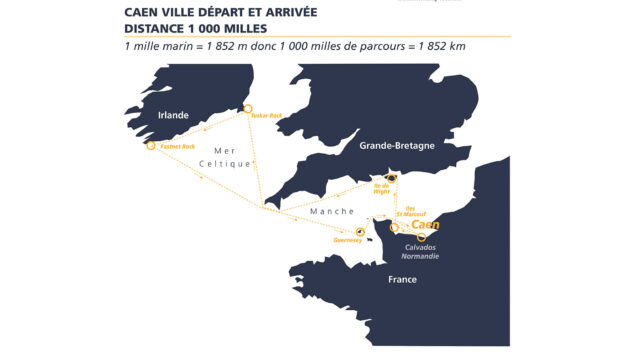
Event map showing the original CIC Normandy Channel Race course

Busy traffic

Cédric de Kervenoaël and Thomas Jourdren were about a mile ahead of #Empowher on their sistership Pogo S4 NST Cabinet Z. Not all the Class 40 skippers are pro sailors – de Kervenoaël is a lawyer during the week, but has been offshore racing for 30 years, and in the Class 40 fleet for a decade. He is also class president. Co-skipper Jourdren, 25, is a préparateur for Class 40s and has competed in the Transat Jacques Vabre.

De Kervenoaël says: “It had been two days of really, really tough sailing because the boats are very hard now. The scows are not so difficult to sail, but difficult to live in. You cannot eat, you cannot sleep.

“We crossed the Channel very, very quickly. And when we rounded the buoy, near Ouessant, it was about 1800-1900. We were preparing for about 15 hours of very [high] speed [sailing] and the wind to be stronger when we arrived at the Fastnet.”

“I was not really sleeping inside, but I’d kept my oilskins on. Really I was wondering if I could put my oilskins out because everything was so wet, but I had no motivation to do that. That proved quite useful later.”

Thompson had a clear visual of NST Cabinet Z as they chased north. “We were slightly south and east of their position, just a bit to leeward. So I could see him quite well – well, I could see his navigation light as it was 0200 in the morning. We were on port tack, and so off to the port side is really clear. It’s really hard to see things that are on starboard because they’re underneath the sails and the waves and the spray.

Article continues below…

The highly competitive Class 40 fleet has long been a proving ground for talent, both for designers and sailors, with…

Two boats achieved stunning victories in the latest edition of the Transat Jacques Vabre, establishing leads before the halfway mark…

“We were crossing the DST off Ouessant, which is the turning point. And it’s quite a busy one. My skipper, Pamela, was relaxing inside, and I was out in the cockpit just racing the boat. We have a screen on the outside, so I’m able to see the AIS and also do the sail adjustments at the same time.

“I noticed two cargos that were coming westbound. They would have been east of us. So they’re in that zone that’s difficult to see. And I could see that the crossing was going to be quite close. At that point, you’re paying more attention, and I’m trying to understand how I’m going to go around these two ships as well. Both boats had about 16-18 knots of boat speed or so.”

On board NST Cabinet Z Cédric de Kervenoaël heard his co-skipper on the VHF radio. “He was calling the cargo, but he was speaking very low, so I didn’t hear exactly what he said. But I learned afterwards that 25 minutes before the collision, he tried to call the cargo. The cargo didn’t answer. And after that, they answered.

“[Thomas] told them that, on the AIS, we were crossing in front of the cargo and he wanted to be sure that the cargo had seen us. And the guy answered, ‘Okay, I move my course’.”

“And maybe five or seven minutes after, I heard the same guy saying, ‘Well, you’re not a sailing boat, you take me for a piece of shit.’”
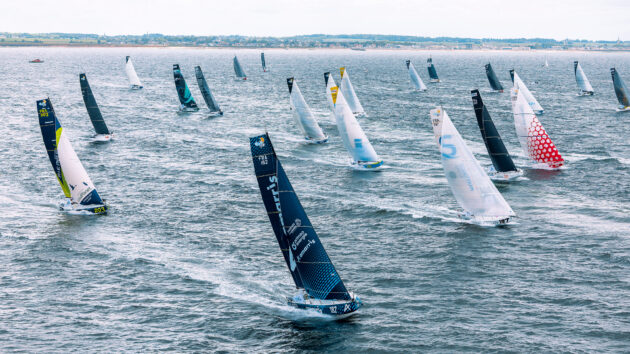
31 Class 40s started the 2025 CIC Normandy Channel Race, an approximately 1,000-mile double-handed offshore race around the English Channel and Celtic Sea. Photo: Photos: Jean-Marie Liot/CIC NCR

Not clear

Monitoring the situation, Thompson recalls. “I heard 191 (NST Cabinet Z) call one of the cargo ships and ask if he can pass ahead. And the guy responds by saying, ‘Yeah, you can pass ahead.’

“I would say by then we’re quite close to the cargo, getting within a mile or so – I did a couple of degrees [adjustment] to just pass behind it, and he was going to try to pass in front of it, basically in between the two cargos, because one was going to be clear ahead.

“Then a few moments later, the guy [on the cargo] comes back on the radio and says, ‘You are the give-way vessel. YOU are the one that’s going to move out of the way.’ And he says it in a way that’s really kind of unprofessional. It was more in his intonation – angry or upset.” Thompson didn’t hear anything further in the VHF exchange.

On NST Cabinet Z de Kervenoaël got up in alarm.
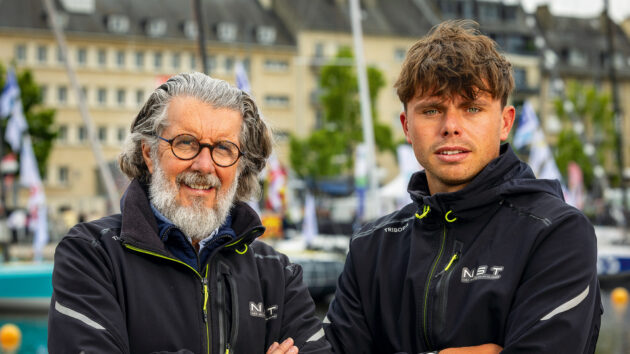
Cédric de Kervenoaël (on left) and Thomas Jourdren. Photo: Jean-Marie Liot/CIC NCR

“I said to Thomas, ‘Did you understand what he said?’ He was not sure, but I understood very well. So I took the radio, and I told them, ‘Yes, we are a sailing racing boat. That’s why we are fast.’ Because I suppose those guys are used to crossing sailing boats at 6.5 knots – not when they’re going at 15 knots.

“But the guy [on the cargo] didn’t answer me. I looked at the chart and I asked Thomas, ‘Okay, look, look, where is the boat? Where is the boat?’ He went outside and said, ‘It doesn’t cross, it doesn’t cross, it doesn’t cross!’
“And then we were crushed by the ship.”

Hit and run

Thompson had heard the conversation and noted it as odd. Watching from #Empowher. “I could see the Class 40 and the cargo ship’s lights coming together. And then I see just the cargo lights, so I assume he passed in front.
“Then I hear on the VHF a guy comes back on – which I assume is the cargo ship because he says, ‘You need to call the Cross.’ I thought that’s a weird thing to say.

“I waited maybe 30 seconds, the cargo ship continues on, and I don’t see the lights of the Class 40 anymore. Then I look at my screen, and their AIS has disappeared on the screen. I pick up the VHF and I call NST. She doesn’t answer. And so I tell Pam, there might be a situation here. Then a radio call comes in. He says, ‘Mayday, the boat is cut in half. We’ve de-masted. Come and get us now.’
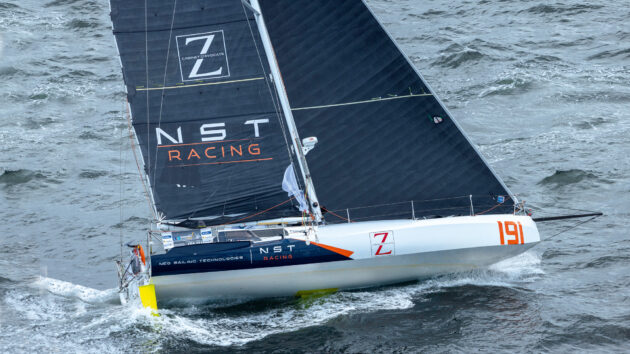
Cédric de Kervenoaël and Thomas Jourdren were racing NST Cabinet Z. Photo: Photos: Jean-Marie Liot/CIC NCR

“It was very crackly because it was just a handheld VHF. So I responded, ‘Okay, we’re going to come right away.’”

Thompson readied his Class 40 – furling the jib and starting the engine, while Lee relayed the Mayday to the Cross Corsen – the French maritime rescue service. Jourdren had also activated the EPIRB on NST.

It’s not totally clear what the cargo skipper meant when he said ‘You need to call the Cross,’ but Thompson believes he was telling the yacht they needed to call the rescue services themselves after the impact. The ship did not stop to offer assistance.

“When I saw the AIS disappear, I just put a very quick waypoint on the Adrena of where it happened,” recalls Thompson, “So we headed over to that zone. We were there within 10 minutes.

“We could see that the boat was in pieces. The bow was apart but attached, and the mast laying in the middle with the sail. The cockpit was slightly sticking out of the water, but most of the back half of the boat was underwater.”

Class 40 rules require each yacht to have large blocks of foam for flotation built-in both forward and aft. “With the keel, the aft section was barely floating, nearly vertical. The crew were on the starboard pushpit. It was the only section that was out of the water, but with the waves, it was still going in the water. We could just see their reflectives on their jackets because we had a big spotlight. That’s how we spotted them,” Thompson adds.

The Cross rescue confirmed that a helicopter could be with them in 40 minutes. They also halted all shipping traffic in the area around the disabled yacht.

“We asked Cédric and Thomas: ‘Do you have your TPS survival suits?’ They said, no, all they had was a handheld VHF. So we relayed that, and the Cross said, ‘Well, you really need to try to get them off because 40 minutes in the water is going to be a long time.’
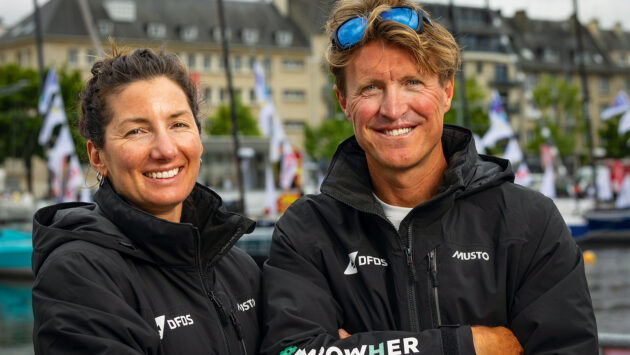
Pamela Lee and Jay Thompson are campaigning the Pogo S4 #Empowher. Photo: Jean-Marie Liot/CIC NCR

“We instructed the crew to inflate their liferaft, get into the raft, then let it float behind the boat. Because with the wreckage and everything in the big swell, it would have been almost guaranteed that we would put a hole in our boat if we even got close. But when they tried to inflate the liferaft, the liferaft didn’t open.”

Next the crew of #Empowher tried a different plan – inflating their own raft, with the intention of letting it drift down to the stranded crew. “We went just upwind of the boat and opened the raft. This was when it got really crazy because I looked down for two seconds to help Pam get the liferaft out of the back. And when we looked up we couldn’t see the boat anywhere. It happens so quickly that you can lose somebody. It took a little moment for us to search around to find them again.

“Then Pam opened the liferaft, and everything went perfect. She was holding on to the rope at the back of the transom. I’m driving the boat, trying to hold station, just to windward so that she could let the raft down to them. And then Pam tells me “There’s nothing on the rope.”

The rope had detached from #Empowher’s liferaft. Having had the scare of losing sight of the Class 40, Jay and Pam decided not to attempt to recover the raft, but instead to keep eyes on the crew – not an easy task short-handed.

“The boats are not easy at all. In one moment, you’re going super fast because you’re going downwind and down swell, kind of surfing. Then the next, you’re trying to go upwind super slow. And you’re trying to stay close, but not too close.
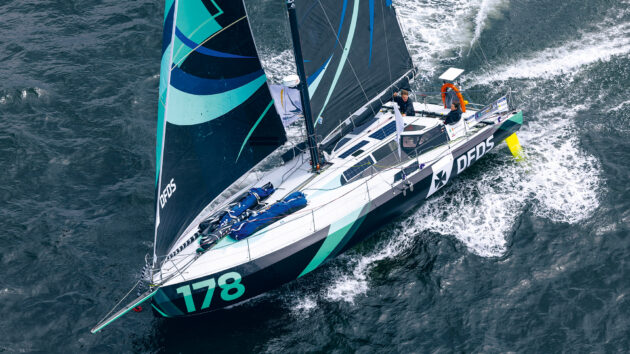
Pamela Lee and Jay Thompson on #Empowher. Photo: Jean-Marie Liot/CIC NCR

Pam was handling all the communications, I was just driving and trying to always keep a visual on the boat, basically making anticlockwise loops around them, which was easiest for me because the port side is where the controls are for the motor.”

Cedric and Thomas confirmed that their situation on the disabled NST Cabinet Z was stable – not sinking, but cold, so #Empowher kept circling for another 20 minutes.

“I think the most stressful part for us was when there was about 10 minutes left to go for the helicopter to arrive,” recalls Thompson. “Every time we did a circle, we would check in with them. But after that 10-minute point, we could start to hear in their voices how they were in themselves [going downhill] a bit. They were asking, ‘Where are you? Where are you guys? I don’t see you anymore.’”

Fortunately the helicopter arrived from Brest shortly after, and the rescue divers swiftly lifted the two men to safety – Jourdren first, as he was suffering from severe cold, then de Kervenoaël, who had broken four ribs in the impact, but – remarkably – both were otherwise unharmed.

Lessons learned

Both Thompson and de Kervenoaël commented on how the Offshore Personal Survival training had helped in the moment. “It was a bit terrifying,” admits de Kervenoaël.

“But as soon as we crashed and saw that we were both still on the boat, we did the job we had to do. The sea survival training was very useful. When you are in this situation, you know exactly what you have to do. So there was no panic. We knew that someone would come and that it would be too stupid to die in that place! It was just a question of time.”

However, Thompson notes that one thing that could improve the training is more on boat-to-boat rescues.
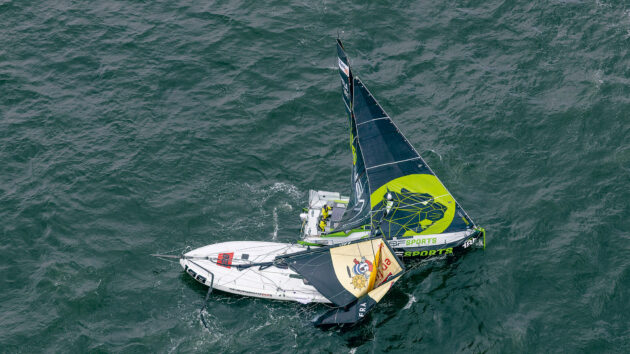
In a separate incident two Class 40s collided at the race start. Photo: Jean-Marie Liot/CIC NCR

“Actually there’s quite a lot of scenarios where one boat is assisting another sailing boat, and that’s often not really taught too much. It’s mainly about what happens when the helicopter comes or a cargo ship.

“For example, something I’d never actually thought about before, was that the rafts have something like 300kg of water ballast. So you can’t just drag it wherever. You either have to get rid of the water ballast once you deploy the raft, or make sure that you don’t inflate it until you’re in the exact right area.”

That two rafts failed in an emergency situation is something the class is taking very seriously. Both boats were carrying Waypoint rafts, favoured by Class 40 skippers for their light weight. The class has since mandated an alternative Plastimo raft, which is around 12kg heavier. Waypoint is also investigating the cause of the failures – Thompson confirmed he was visited by the manufacturer to discuss what happened and view the liferaft on NST Cabinet Z (the Class 40 hull was salvaged).
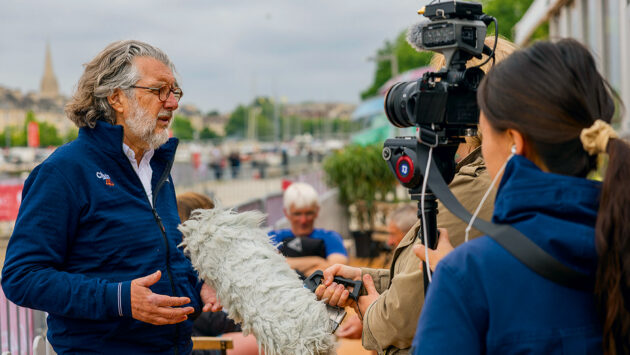
Cédric de Kervenoaël speaks to the media after his dramatic rescue. Photo: Jean-Marie Liot/CIC NCR

De Kervenoaël says the class will also look into liferaft positioning (both the Pogo S4s had their raft stowed on the transom), and how grab bags can be best secured within reach. “Maybe it should be attached somewhere because I was very lucky to find it floating beside the boat. But if we hadn’t had the grab bag, with the VHF, it would have been another story.”

The collision itself is subject to a police investigation. The cargo ship Ital Bonny, which was Italian flagged, was intercepted by a French warship and escorted to shore.

“Clearly, a conversation was going on about taking avoiding action, and for some reason, that didn’t happen. In terms of the angle [crossing the TSS], there was no fault. The race crew did everything right,” an experienced Class 40 sailor told me, who didn’t want to be identified.

However, as the confusion on the VHF shows, calling a cargo ship is no guarantee of a safe outcome. “I basically never call the ships,” says Thompson, “just because in my experience, it’s very rare that it goes well. Often you have a lot of different nationalities so it’s quite difficult to speak with them. So I think that should be your secondary step – if you need to do it. The very first step should be to adjust your course early so that it doesn’t become an issue.
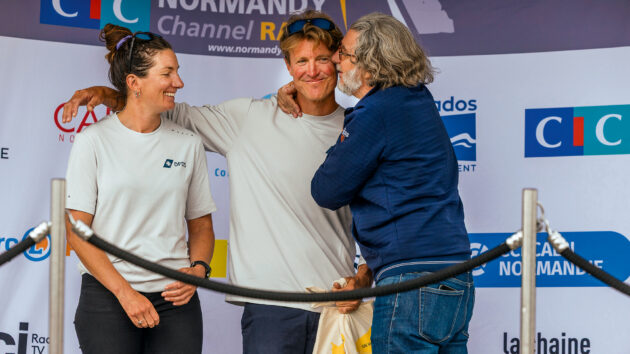
Cédric thanks Thompson and Lee for their part in saving him and his co-skipper. Photo: Jean-Marie Liot/CIC NCR

“When we’re crossing the lanes, closing speed starts to get so quick because we’re averaging between 16-18 knots, and the cargos are going anywhere from 12-18 normally. When you’re going 6 knots, you have so much more time.

“So it’s really important to get that visual – because the moment you get a visual, normally you can tell fairly easily how it’s going to cross. Sometimes it’s difficult, and you have to do that painful thing of letting the sheets go and the boat slow down a bit, or even turn downwind for a second to make sure that you can really see.

“Often, those decisions that we figure would be quite standard end up being really difficult when you haven’t slept for a couple of days. It’s definitely the most stressful and difficult thing on these races, because we’re basically crossing a freeway on a bicycle.”


If you enjoyed this….

Yachting World is the world’s leading magazine for bluewater cruisers and offshore sailors. Every month we have inspirational adventures and practical features to help you realise your sailing dreams.

Build your knowledge with a subscription delivered to your door. See our latest offers and save at least 30% off the cover price.

Note: We may earn a commission when you buy through links on our site, at no extra cost to you. This doesn’t affect our editorial independence.

Chat/call The AYB Team